KEY TECHNOLOGIES FOR WASTEWATER TREATMENT
Explore Veolia’s proven technologies for optimised performance, reduced footprint and water reuse.
At Veolia, we combine global expertise and local experience to deliver a portfolio of proven wastewater treatment technologies for industrial, municipal, and pharmaceutical applications. Each technology is designed to meet the highest standards of efficiency, compliance and sustainability, helping organisations optimise performance, reduce operating costs, and support water reuse initiatives.
Explore each solution below to learn how our systems can address your specific wastewater challenges, with links to full technical details and case studies.
ZEEWEED™ MEMBRANE BIOREACTOR
High-quality effluent in a compact, flexible system
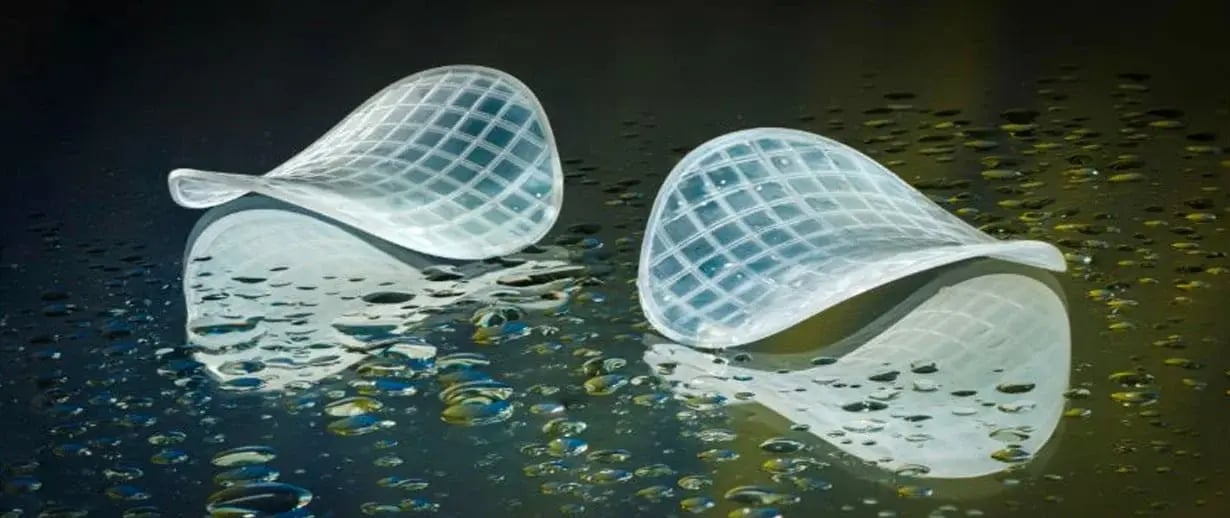
The ZeeWeed™ MBR combines biological treatment with immersed ultrafiltration membranes to produce consistently clear, reusable wastewater. Its compact design eliminates secondary clarifiers and supports both new-build and retrofit projects.
Key Benefits:
-
Reliable, high-quality effluent for discharge or reuse
Consistently meets stringent environmental and regulatory
standards, making it ideal for industrial, municipal and pharmaceutical applications. -
Smaller footprint and simplified plant design
Eliminates the need for secondary clarifiers and
tertiary filters, reducing civil works and freeing up
valuable space. -
Energy-efficient operation and lower lifecycle costs
Optimised membrane performance and process
control reduce energy consumption and
overall operating expenses. -
Flexible for upgrades or expansions
Modular design allows for easy retrofitting
into existing plants or scaling for future capacity increases.
BIOBED® ADVANCED
High-performance anaerobic treatment processes
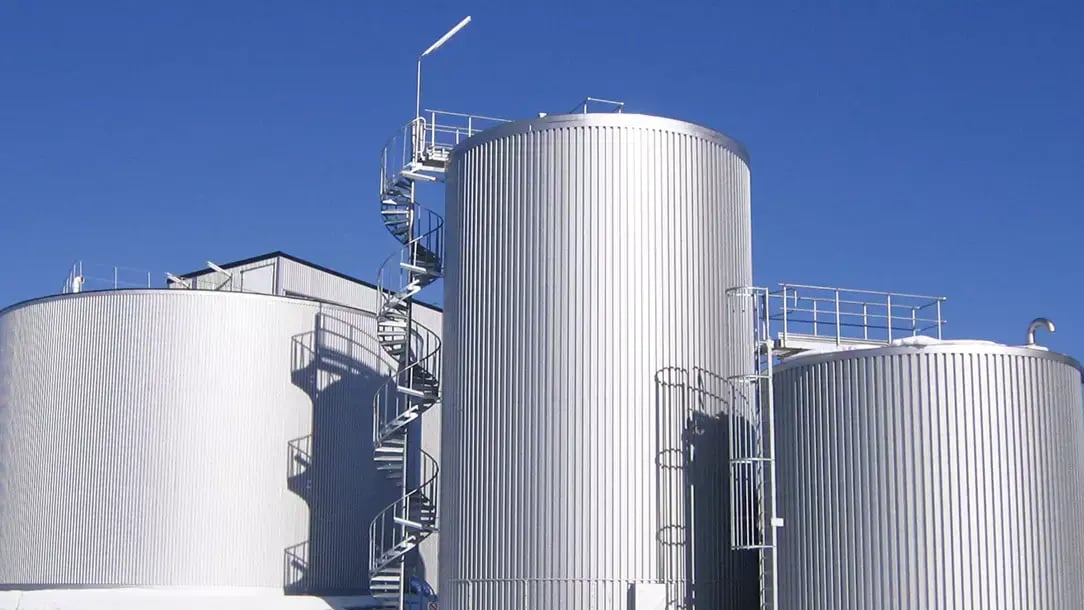
The Biobed® Advanced system combines the excellent performance of the Upflow Anaerobic Sludge Blanke (UASB) - renowned for its high COD removal efficiency - with the cost effectiveness and small footprint of the Expanded Granular Sludge Bed (EGSB), achieving multi-level gas separation.
Key Benefits:
No odour emission: Systems can be built as a completely closed system to prevent odour emission. This eliminates the need for expensive odour control infrastructure such as biofilters or chemical scrubbers.
Low investment & operating costs: The system is proven to be stable and reliable. The settler price is reduced by using advanced manufacturing techniques.
Can be transported cost effectively: Modular, compact design optimised for efficient shipping and logistics.
Excellent biomass inventory: The protected biofilm environment maintains a diverse microbial community capable of degrading complex organic compounds.
Reduced aerobic post treatment: Highly efficient biological treatment in the BioBed system significantly reduces the organic and nutrient loading on downstream aerobic processes.
MEMTHANE®
Biological treatment of heavily contaminated wastewater
Memthane® is an anaerobic membrane bioreactor (AnMBR) that maximises renewable energy production while producing excellent-quality effluent that can be reused or discharged directly to sewer. AnMBR technology is ideal for the treatment of wastewater streams and slurry with high concentrations of organic matter, solids, fat, oil and grease.
Key Benefits:
-
Cost effective & efficient | Transforms waste treatment from a cost centre into a revenue opportunity by converting organic waste into renewable energy.
-
Reduces environmental footprint | Energy-positive operation means the system generates more energy than it consumes, making it one of the most sustainable wastewater treatment options available.
-
Robust, reliable treatment | This odour free operation is easily scalable to meet individual plant characteristics. Membrane filtration ensures consistent, high-quality effluent regardless of influent variations, meeting stringent discharge standards
AnoxKaldnesⓇ MBBR
The Moving Bed Biofilm Reactor (MBBR)
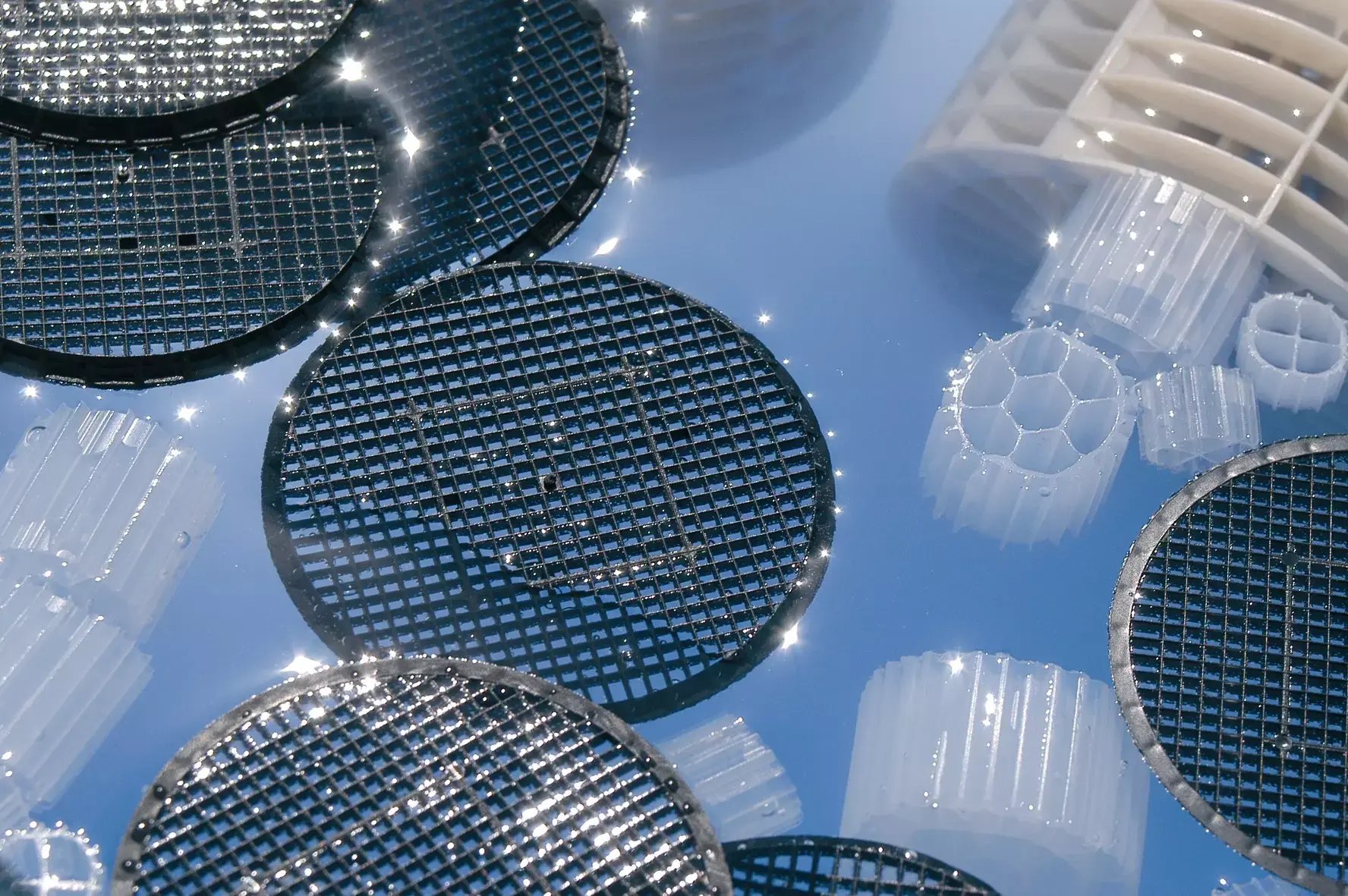
The Moving Bed Biofilm Reactor (MBBR) solution by AnoxKaldnesⓇ is a biological process where biofilm grows on carriers suspended in wastewater. This technology implements the biofilm fixed on the surface of a carrier. This biological wastewater treatment and biological water treatment process treats pollutants in a cost-efficient way and it is used across almost all municipal and industrial market sectors such as food and beverage, mining, oil and gas, and pulp and paper.
Key benefits:
- Compact footprint: Requires significantly less space than conventional activated sludge systems due to high biomass concentration on carriers
- Simple to operate: The self-regulating biofilm system reduces the need for constant monitoring and adjustment.
- Ensured a more sustainable approach to production: Lower sludge production decreases disposal costs and environmental impact.
- Easy to retro fit to existing infrastructure: Can be integrated into existing treatment tanks and basins without major structural modifications.
AnoxKaldnesⓇ MBBR Pack
Moving biofilm reactor, in a standardised package.
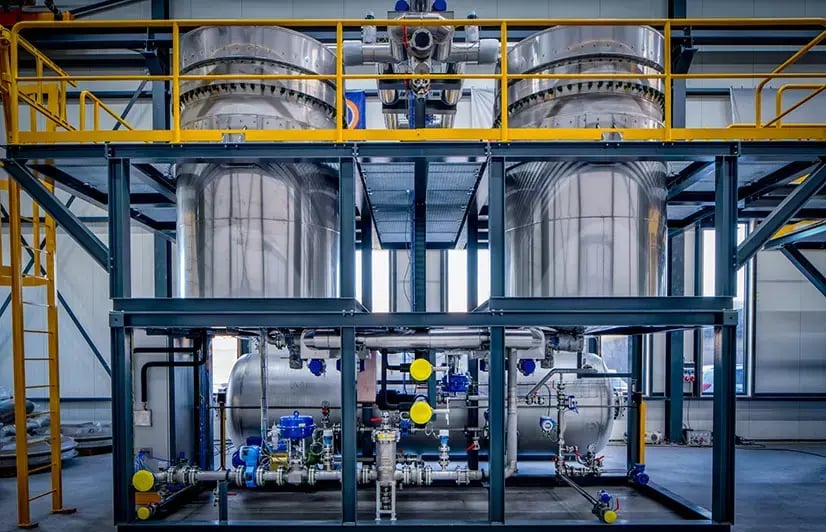
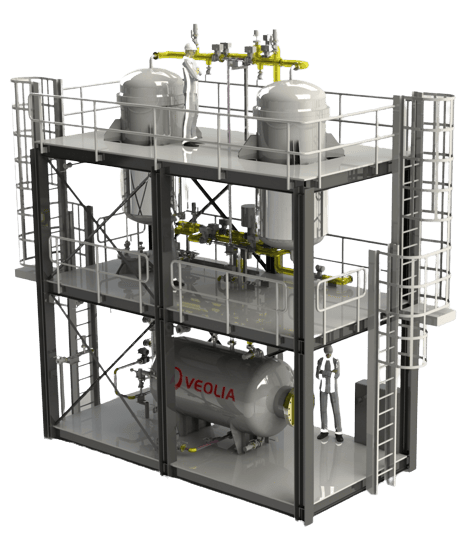
MBBR Pack technology is based on the biofilm principle, which uses microorganisms for biological treatment of wastewater. To meet the different challenges and quality objectives of each industrial and municipal customer and to provide them with global solutions, the MBBR Pack can be combined with numerous processes designed and manufactured by Veolia for both the pre-treatment and secondary treatment stages.
Key benefits:
- Quick delivery: Pre-engineered, standardized modules are manufactured off-site and ready for rapid deployment.
- Easy installation: Plug-and-play design minimizes on-site construction work and complexity. Pre-assembled components reduce installation time by up to 50% compared to conventional systems.
- Small footprint: Compact modular design requires minimal land area, making it ideal for space-constrained sites or expensive urban locations.
- Automatic operation: Advanced control systems manage aeration, mixing, and process parameters with minimal operator intervention.
AnoxKaldnes™ Z-MBBR
AnoxKaldnes™ Z-MBBR
A new generation of biofilm carriers for moving bed biofilm reactors
A result of two decades of development work.
The AnoxKaldnes™ Z-MBBR is a hybrid wastewater treatment system that combines MBBR biofilm carrier technology with conventional activated sludge in the same reactor. This integrated approach uses both suspended biomass and biofilm growing on moving carriers to deliver improved nutrient removal, and superior process stability.
Key benefits:
- Enhanced treatment capacity: Transforms existing activated sludge systems into high-performance hybrid reactors by adding biofilm carriers that provide additional surface area for microbial growth.
- Eliminates variations in performance due to changes in biofilm thickness: Removes limitations associated with clogging of the carriers
- Small footprint: Compact modular design requires minimal land area, making it ideal for space-constrained sites or expensive urban locations.
- Z-MBBR delivers all the conventional advantages of MBBR; small footprint, stability, low maintenance and robust treatment while offering the ability to customize unique solutions
ANITA™ Mox
The MBBR Solution for High Ammonia Waste.
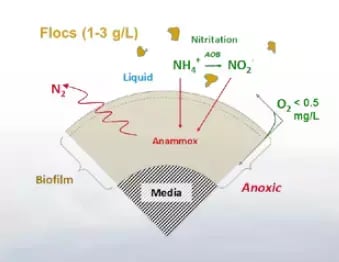
The ANITATM Mox processes - MBBR and Hybas (Integrated Fixed Film Activated Sludge) are single-stage deammonification technologies where greater than 90% of ammonia and 75-85% of total nitrogen can be removed. The ANITA™ Mox process is performed in 2 steps: aerobic nitritation and anoxic ammonia oxidation performed by anammox bacteria.
Key benefits:
- Volumetric Nitrogen removal rates have shown to be 2-2.5 times higher thereby further reducing the footprint.
- The operational DO in IFAS ANITA™ Mox is lower than in pure ANITA™ Mox which results in energy savings
- IFAS ANITA™ Mox has been shown to better handle the presence of influent COD
- Lower effluent concentration of ammonia can be targeted
eXeno™
eXeno™
For the biological treatment of micropollutants
More than 30 years of experience with over 25 references in the pharmaceutical industry
eXeno™ is a moving bed biofilm reactor (MBBR) technology that uses specialised microorganisms growing as a biofilm to biologically degrade and treat micropollutants with little or no chemical dosing, low energy consumption and operational costs.
Key benefits:
-
High removal efficiency of micropollutants:
Achieves 50-80% reduction of persistent
pharmaceuticals and difficult-to-degrade compounds. -
Environmentally friendly and cost-efficient:
Biological treatment with reduced energy and
chemical consumption, supporting sustainability
and lower operating costs. -
Regulatory compliance and reliability:
Proven, stable performance that helps
meet strict EU and Irish discharge standards
for pharmaceutical wastewater.
MPPE® (Macro Porous Polymer Extraction)
Highly effective technology for removing dissolved and dispersed hydrocarbons.
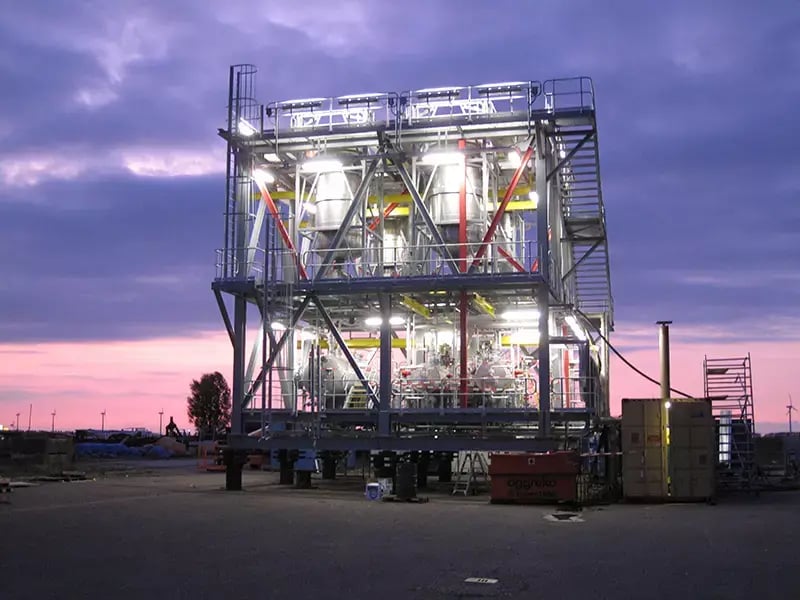
MPPE® is a fully automated, remote controlled and guaranteed method for removing dissolved and dispersed hydrocarbons from water in one step, with efficiencies of 99.99% down to below ppb level, or as specified. This process applies to different types of hydrocarbons, including aliphatic, aromatic, polyaromatic, halogenated, such as chlorinated and bromated.
Key benefits:
-
Very high separation performance with reduction factor 1,000,000 times, equal to 99.9999% removal if required.
-
Low energy consumption with steam usage up to 50 times lower than steam stripping.
-
Easy, reliable and flexible operation: once installed, the fully automated unit can be controlled remotely and with a turndown to 10% of the design capacity
-
Robust: no scaling and no interference by constituents like dissolved iron, heavy metals, salt and polar compounds.
MPPS
Ensures 99,99% of dissolved solvents removal from waste streams.
MPPS removes and recovers solvents by means of adsorption on dedicated media. By applying steam regeneration of the loaded media, the solvents are recovered in a concentrated form. This makes them suitable for either reuse, or if that is not possible, the concentrate can be disposed of as high caloric waste.
Key benefits:
-
No chemicals used: MPPS operates without requiring hazardous chemicals, acids, or bases for the purification process
-
No sludge or waste gas produced: The system generates zero secondary waste streams such as contaminated sludge or harmful emissions, eliminating disposal costs, regulatory compliance burdens, and environmental impact.
-
Low energy consumption: MPPS utilizes energy-efficient membrane technology that requires significantly less power compared to traditional thermal separation methods like distillation or evaporation, resulting in reduced operating costs and a smaller carbon footprint.
-
Fully automated: The system operates with advanced automation and control systems, ensuring consistent performance, reducing human error, and allowing seamless integration into existing production lines
Related Articles
💬 Reach out today
Learn how we can adapt our purified water system to suit your needs today.

.jpg?width=1000&height=800&name=Untitled%20design%20(40).jpg)


.webp?width=650&height=424&name=eXenoTM-illustration-New%20(1).webp)


.jpg?width=600&name=medium%20(3).jpg)